
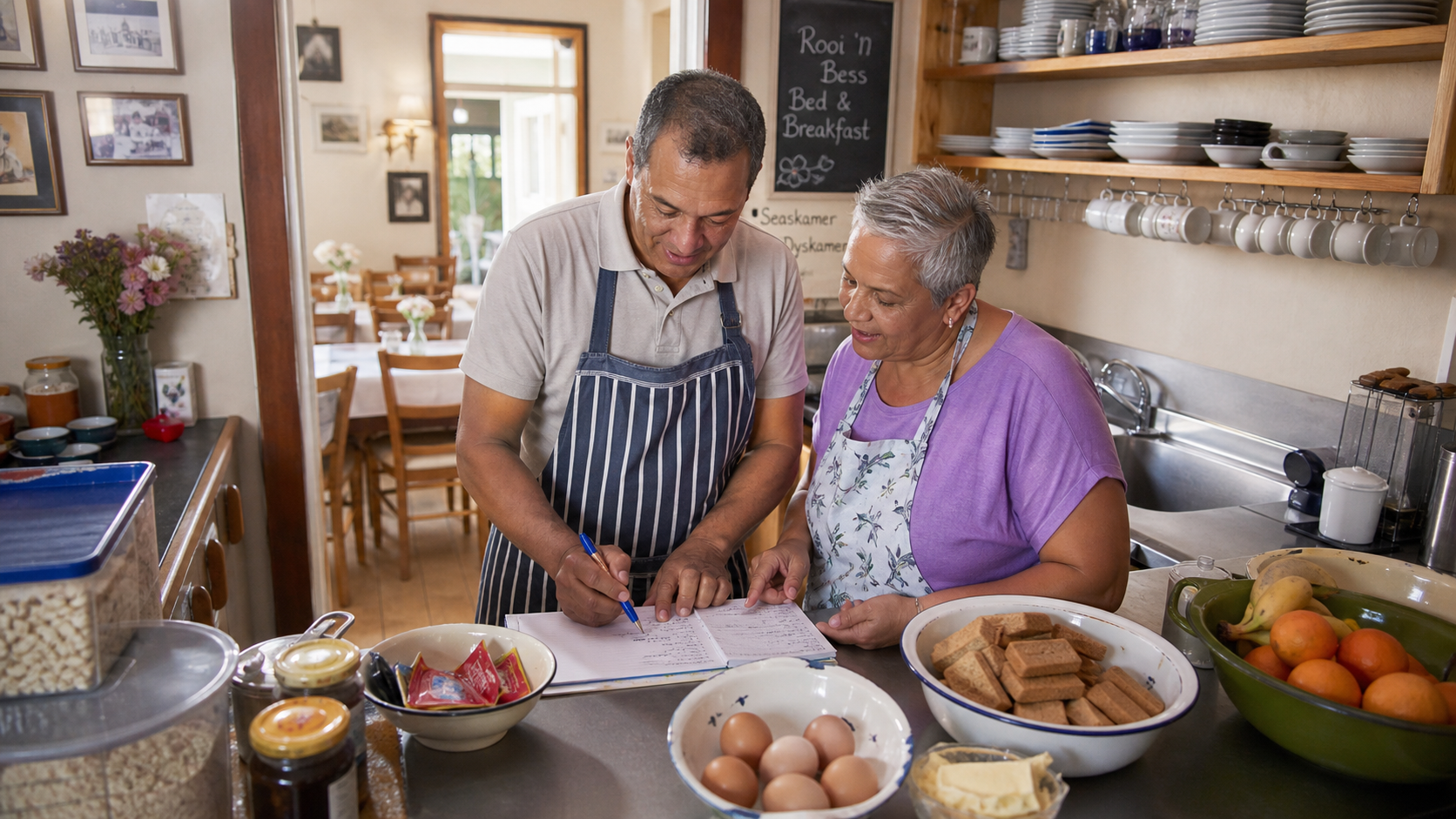
Breakfast feels successful when the dining room is full and the plates come back clean. The margin tells a different story. Bacon, eggs, fruit, yoghurt, coffee, juice, bread, gas, electricity and staff time can turn an “included” breakfast into the most poorly measured product in the guesthouse.
Find the real cost per guest
Start with the edible portion actually served, not the supplier pack price. If a R210 bacon pack produces 14 portions, bacon costs R15 per guest before waste. Add the same calculation for eggs, bread, spreads, fruit, beverages and condiments. Then include a sensible allowance for cleaning materials, energy and breakfast labour.
If ingredients cost R58, labour R24 and operating consumables R8, the breakfast costs about R90 per guest. For two guests in a R950 room, breakfast consumes R180 before commission, housekeeping, linen, maintenance and tax.
Buy to a par level, not to anxiety
Use tomorrow's occupied rooms, guest count, dietary notes and a small safety margin to calculate what should be on hand. Set a minimum and maximum level for high-use items. Buying a month's yoghurt because it is discounted is not a saving if a third expires.
- Receive stock against an order or till slip.
- Record quantity, unit cost, supplier and use-by date.
- Rotate stock first-expired, first-out.
- Separate spoilage, staff meals and guest consumption.
- Count expensive items such as meat and coffee regularly.
Use the menu to control waste
A short menu with shared ingredients is easier to buy and cost than a restaurant-sized menu. Let eggs, mushrooms, tomato and toast serve several combinations. Ask for breakfast choices the evening before when possible. That gives the kitchen a reliable production number and reduces “just in case” cooking.
Food safety is part of the system
South Africa's food-premises hygiene regulations, commonly referred to as R638, cover Certificates of Acceptability, food-handler hygiene, suitable premises and controls around storage, temperatures and contamination. Requirements are enforced through local authorities, so confirm the process with your municipality or environmental health office.
Keep supplier invoices, receiving dates, batch information where relevant, fridge temperatures and corrective actions. Traceability matters when a supplier recalls a product.
Turn costing into a room-rate decision
Review breakfast cost per occupied room, not only total grocery spend. Compare it with the room rate and booking source. An OTA booking with commission and two breakfasts has a different contribution than a direct single-occupancy booking.
A breakfast can be loved by guests and still need a price, portion or purchasing change. Costing lets you protect both the experience and the business.
Build a breakfast costing sheet that staff will use
Give each menu item a standard portion, current unit cost and last review date. Add expected guests and the quantity required for tomorrow. Record actual high-cost usage and waste, rather than weighing every slice of toast. Review supplier prices monthly and immediately after a menu or portion change.
Questions to ask a supplier
- What is the delivered unit price and minimum order?
- Which days and areas do you deliver?
- How are substitutions, damaged goods and cold-chain failures handled?
- Can invoices identify the product and VAT correctly?
Buying locally can improve freshness and the guest story, but reliability, traceability and consistent quality still matter.