
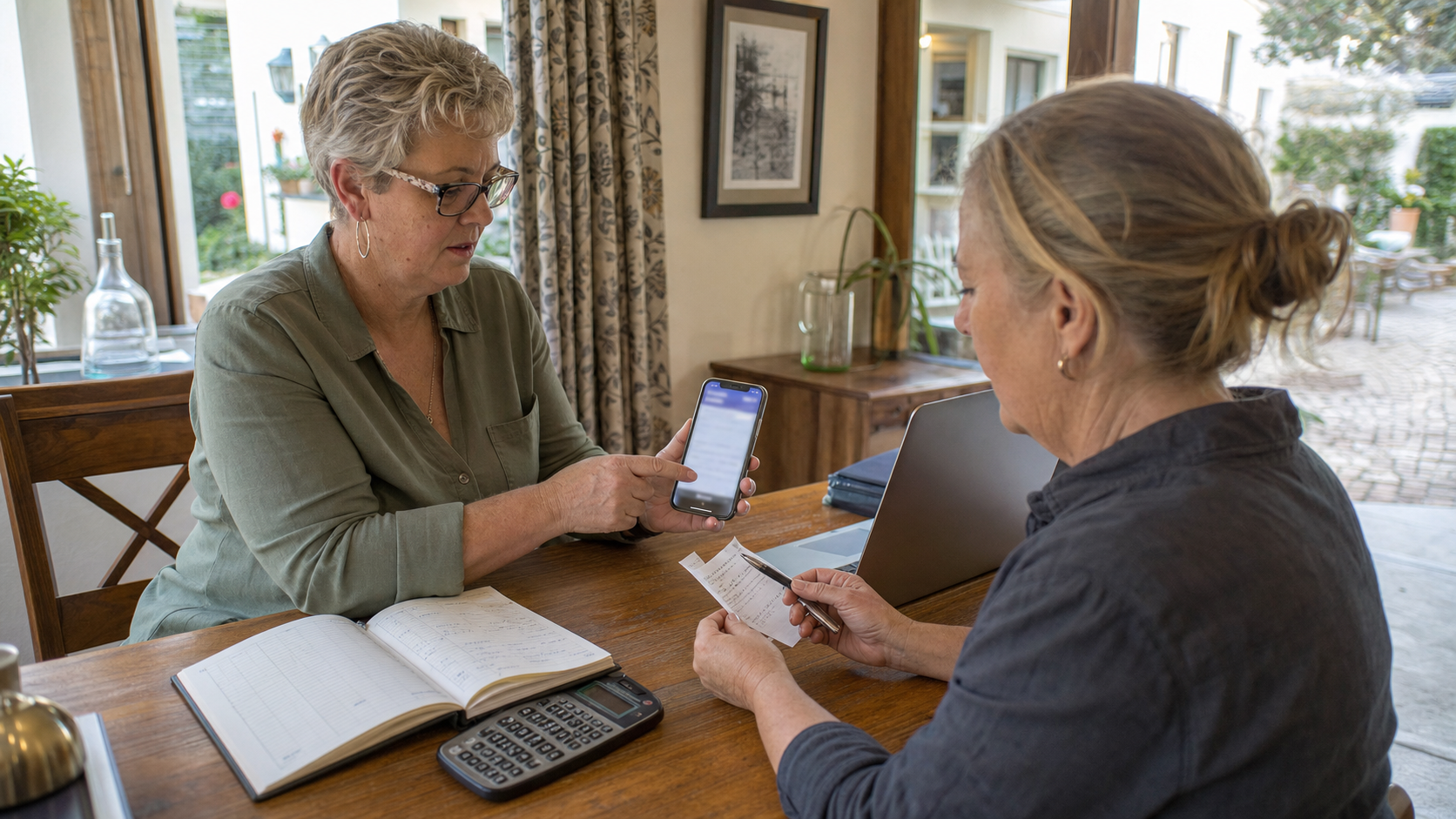
“I’ve sent the POP” is one of the most common messages in a South African guesthouse. It is also where poor payment records begin. A proof-of-payment image lands in one person's WhatsApp, the diary gets a tick, and the balance only becomes urgent when the guest is standing at reception.
Separate the booking from the payment
A booking can be provisional while payment is unpaid, submitted for verification, partly paid, paid or refunded. Do not use one vague “confirmed” tick for all of those facts. Record the expected deposit, due date, amount received, clearing date, method and remaining balance against the booking.
Use the same deposit workflow every time
- Send a written quote with dates, room, total, deposit, deadline and cancellation terms.
- Hold the room provisionally until a clear date and time.
- When a POP arrives, verify the banking reference and cleared funds according to your risk policy.
- Record the payment against that booking—not only in the bank reconciliation.
- Send a confirmation showing total, paid amount and balance.
- Schedule the next balance reminder before arrival.
Never ask guests to send sensitive banking information that you do not need. Train staff to recognise altered POPs, incorrect beneficiary details and urgent requests to refund “overpayments.”
Write a cancellation policy you can explain
South Africa's Consumer Protection Act allows reasonable cancellation charges in relevant circumstances. Reasonableness depends on factors including notice, the likelihood of finding another guest, the nature of the booking and industry practice. A blanket “we keep 100% in every situation” rule can create unnecessary disputes.
Use a staged policy that reflects the property's real risk, and have its legal wording reviewed. Group bookings, events and peak dates may justify different terms from an ordinary one-night stay.
Treat refunds as transactions
Keep the original payment, cancellation date, approved deduction, refund amount, reason, approver and payment reference. Never delete the payment to make the balance look right. The audit trail should explain what happened.
Watch the numbers behind the deposits
Track provisional bookings past deadline, deposits due this week, balances due before arrival, cancellations, no-shows and refunds. These lists protect cash flow better than finding problems during month-end bookkeeping.
The POP is a message. The booking ledger is the record.
A simple booking example
A two-night stay totals R2,400. The property requests a 50% deposit by 14:00 the next day. Record R1,200 as expected, not received. When funds clear, record the transaction date and reference, then confirm a R1,200 balance due before arrival. If the guest adds a R300 transfer, the stay total becomes R2,700 while the original deposit record remains unchanged.
Daily deposit list
Review provisional bookings expiring today, POPs awaiting verification, deposits overdue, arrivals with balances, and refunds awaiting approval. Five minutes on this list is cheaper than holding an unpaid room through a busy weekend.